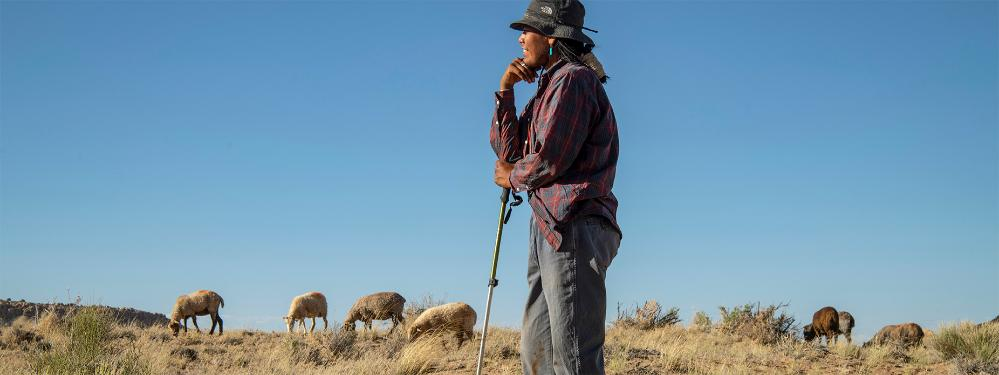
AakʼeigoFall
With the new moon, Fall marks the start of our Diné New Year — harvest time and preparation for the colder months.
Introducing the ram or billy into the flocks and exchanging; harvesting farm crops; collecting wood for weaving tools and basketry materials; gathering fall plants for the colors to dye wool; and preparing winter food — making jerky and storing for the months ahead.
HaigoWinter
Winter focuses on rest and storytelling — the quieter season the Diné use for cultural continuation.
Communal Spin-Off gatherings, processing wool, weaving baskets and belts — all while telling our creation and winter stories of the animals as they hibernate, and beginning our winter ceremonies.
Jóhonaa'éí t'ą́ą́' ńdeesdzáWinter Solstice · ~Dec 21
The Diné Winter Solstice — the return of the light and the renewal of life, a time for reflection and connection with nature and community.
Winter storytelling of transformation and renewal, ceremonies and traditional games, and cooking demonstrations — families and community gathering to celebrate, reinforcing our bonds and cultural identity.
DaangoSpring
Spring marks a time of renewal and growth — the rejuvenation of the land and the flock.
Shearing, drenching, castrating, docking, vaccinating, sheep ceremonies, and planting the early crops.
Shį́į́goSummer
Summer emphasizes warmth and the abundance of resources.
Trailing the flocks to summer camp; planting corn, beans, squash, and melons; and foraging herbs, berries, roots, fruits, and corn pollen.
Shį́įgo Shá NináádááhSummer Solstice
The Diné Summer Solstice — the sun at its highest, marking the start of summer and the sacred balance between the earth, the sun, life, and our dibé (sheep).
Ceremonies honoring the sun and its life-giving power, and the planting and harvest that align the camp with the cycles of existence — a time of celebration, reflection, and balance.